Why I Changed the Way I Exercise in Midlife (And Why It Was One of the Best Decisions I Ever Made)
I've always felt incredibly fortunate that exercise has been part of my life for as long as I can remember.
As a teenager, through my twenties and into my thirties, I loved being active. I played competitive hockey for many years, enjoyed tennis, running, played a little golf and generally loved anything that challenged me physically. I also loved the way I trained. Fast-paced, high-intensity sessions, pushing myself hard, getting completely out of my comfort zone and enjoying that endorphin rush afterwards. It wasn't about burning calories for me—I genuinely loved the challenge and seeing what my body was capable of.
When My Body Started to Change
As I moved into my mid-forties, however, I started to notice that although my enthusiasm for high-impact exercise hadn't changed, my body was beginning to.
I developed a long-term knee injury and some of the high-impact training I had always enjoyed simply wasn't suiting my joints anymore. Recovery took longer, little niggles became more common, and I realised I couldn't continue training exactly as I always had.
At first, I found this incredibly frustrating.
Fast-paced, challenging exercise had always been part of who I was, and I wasn't ready to give up something I genuinely loved.
However, I quickly realised I had two choices: continue trying to train in a way that no longer suited my body, or adapt and find a new way of exercising that supported both how my body was changing and my long-term health.
I chose to adapt.
Learning to Train Smarter
That completely changed my approach to exercise.
Giving up was never an option for me. Instead, I learned to train differently.
Rather than relying on lots of high-impact exercise, I began incorporating lower-impact cardiovascular training that still challenged me but was kinder to my joints.
The biggest change, however, was making strength training a real priority.
Previously, I would have used lighter weights within circuit-style classes, but I never really focused on progressive strength training. Today, strength training forms the foundation of my exercise routine because I understand how important maintaining muscle and building bone becomes as we move through midlife.
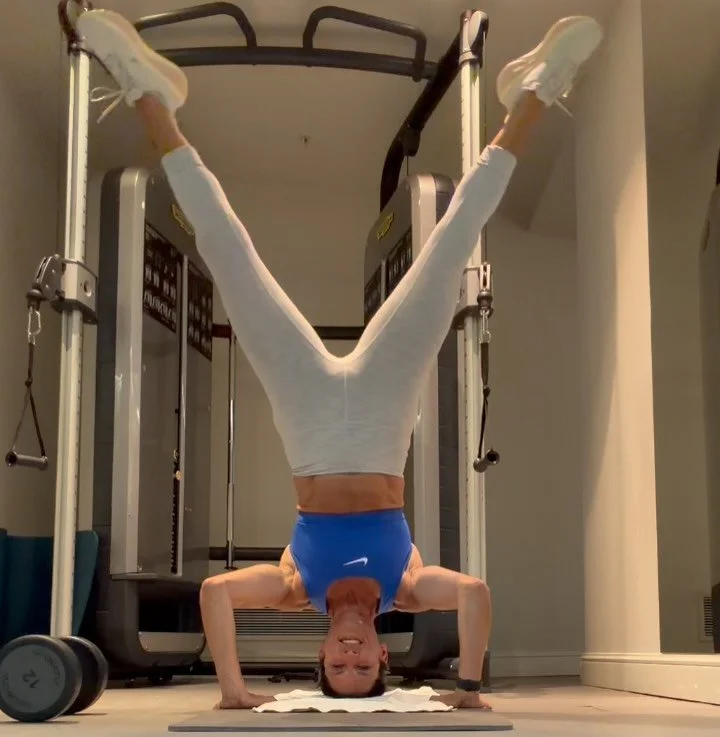
I also continue to practise Pilates, which helps maintain flexibility, mobility, balance and core strength.
And something I value just as much now is everyday movement. Walking more, breaking up long periods of sitting, moving regularly throughout the day and generally staying active all contribute to better long-term health.
The habit of exercising never changed. The way I exercise did.
What the Evidence Tells Us
Interestingly, my own experience closely reflects what current physical activity guidelines and research recommend for women in midlife.
As oestrogen levels decline, women naturally experience changes in muscle mass, joint mobility, bone density and recovery. Because of this, a balanced approach to exercise becomes increasingly important.
Current physical activity guidelines, together with research on healthy ageing and women's health, support including the following in a well-rounded exercise programme:
Progressive strength training at least twice a week to help maintain muscle, strength and bone health.
Regular cardiovascular exercise to support heart, brain and metabolic health.
Some short bursts of higher-intensity exercise, where appropriate, to help maintain cardiovascular fitness.
Weight-bearing activity, where appropriate, to support bone health.
Daily movement and reducing prolonged periods of sitting.
My Biggest Lesson
Looking back, I'm actually grateful that my body encouraged me to rethink how I exercised.
At the time, I was disappointed. I couldn't continue training exactly as I always had.
Today, I see it differently.
Instead of giving up, I adapted.
My weekly routine now includes strength training, cardiovascular exercise, Pilates and daily movement. It looks different from twenty years ago, but it's far better suited to where I am now and, more importantly, where I want to be in the future.
For me, exercise is no longer about trying to train like I did in my twenties.
It's about staying strong, maintaining muscle, supporting my heart and bones, having energy for everyday life and continuing to enjoy movement for decades to come.
My Message to Women in Midlife
If there's one message I'd like every woman to take away from this, it's this:
Don't compare your body today with the one you had twenty years ago.
Listen to it.
Work with it.
Adapt when you need to.
Find movement that feels good, challenges you appropriately and supports your health not just today, but for the years ahead.
Because the goal isn't simply to keep exercising.
The goal is to keep enjoying movement for the rest of your life.
References
World Health Organization. WHO Guidelines on Physical Activity and Sedentary Behaviour (2020).
UK Chief Medical Officers. Physical Activity Guidelines (2019).
American College of Sports Medicine. ACSM's Guidelines for Exercise Testing and Prescription (11th Edition).
Royal Osteoporosis Society. Exercise and Bone Health.
Sims ST. Next Level: Your Guide to Kicking Ass, Feeling Great, and Crushing Goals Through Menopause and Beyond (2022).